Financial Performance Dashboard: 8449861927, 8453023586, 8455203526, 8458362040, 8472578339, 8474911100
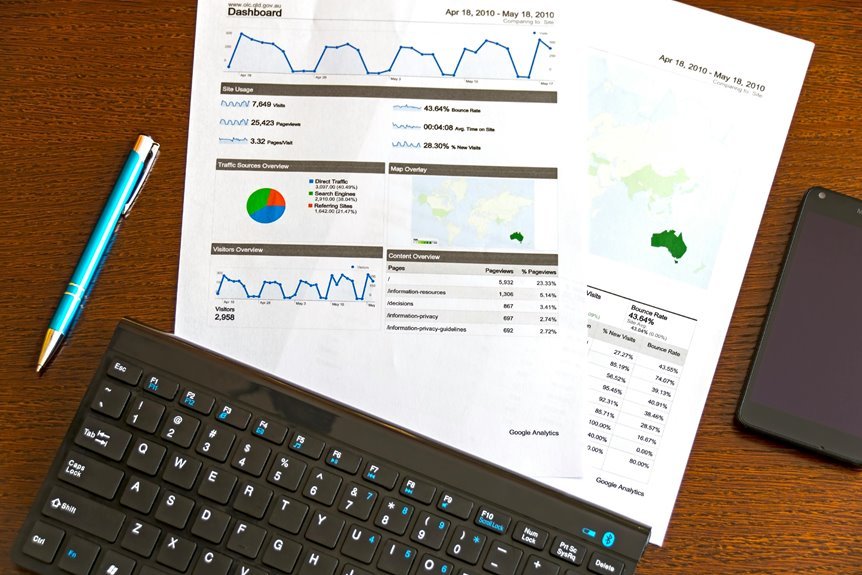
A Financial Performance Dashboard provides organizations with essential insights into their financial health. By visualizing key metrics such as revenue and expenses, it enables stakeholders to grasp complex data easily. This tool not only aids in tracking performance but also ensures quick adaptability to financial shifts. Understanding its key features and implementation strategies could significantly enhance a business’s operational effectiveness. However, what specific advantages might emerge from adopting such a dashboard?
Key Features of a Financial Performance Dashboard
Although financial performance dashboards can vary significantly in design and complexity, they typically share several key features that enhance their utility for stakeholders.
Essential components include robust data visualization tools that distill complex information into accessible formats, and real-time tracking capabilities that allow users to monitor financial metrics as they evolve.
These features empower stakeholders to make informed, timely decisions based on current financial conditions.
Benefits of Using a Financial Performance Dashboard
While organizations strive for financial clarity and agility, the adoption of a financial performance dashboard offers numerous advantages that significantly enhance decision-making processes.
These dashboards provide real-time insights into key financial metrics, facilitating swift responses to changing conditions.
Additionally, data visualization transforms complex information into intuitive formats, enabling stakeholders to grasp critical trends and make informed decisions, ultimately driving organizational efficiency and effectiveness.
Implementing a Financial Performance Dashboard in Your Business
To successfully implement a financial performance dashboard, organizations must first assess their specific financial reporting needs and objectives.
This entails selecting appropriate metrics and ensuring effective data visualization for clarity.
Integrating real-time analytics facilitates timely decision-making, empowering users with actionable insights.
Conclusion
In conclusion, a Financial Performance Dashboard emerges as an essential instrument for organizations aiming to enhance their financial oversight. By consolidating crucial metrics into a coherent visual format, it fosters informed decision-making and agile responses to economic shifts. The systematic implementation of such dashboards not only streamlines financial performance tracking but also cultivates a culture of accountability and transparency, ultimately driving improved operational efficiency. Organizations that leverage these tools position themselves to navigate complex financial landscapes with greater confidence and precision.