Financial Health Dashboard: 8179936660, 8182871899, 8183375498, 8186711046, 8283768301, 8283931100
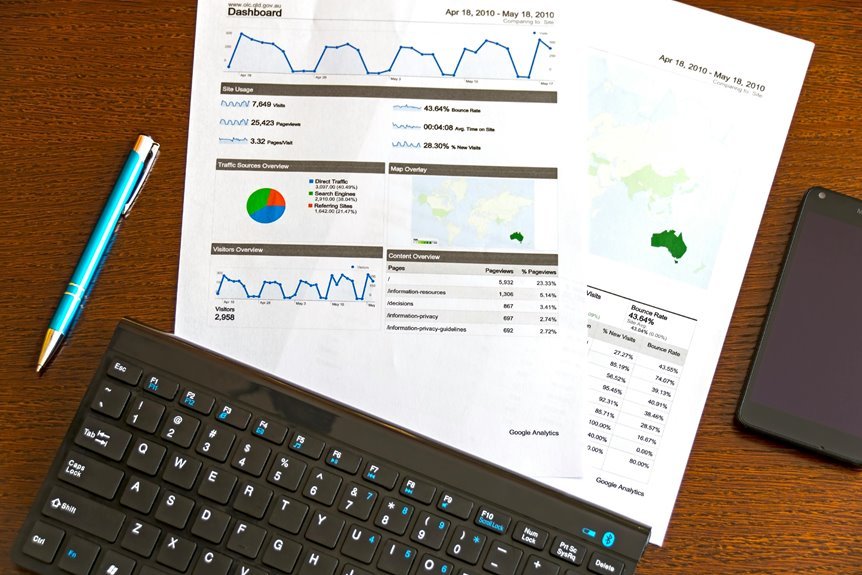
The Financial Health Dashboard serves as a critical instrument for organizations aiming to quantify their financial stability. By integrating key metrics like liquidity ratios and cash flow, it provides stakeholders with actionable insights. Customizable features allow the dashboard to reflect specific financial objectives. However, its effectiveness is contingent upon regular updates and analysis. Exploring how these elements interact can reveal deeper implications for financial autonomy and long-term planning.
Understanding Financial Metrics
While many individuals and organizations may overlook the significance of financial metrics, understanding these indicators is crucial for assessing financial health.
Financial ratios provide insights into liquidity, profitability, and efficiency, while cash flow analysis reveals the organization’s ability to sustain operations and invest in growth.
Together, these metrics empower decision-makers to navigate towards financial autonomy and long-term stability, ensuring informed choices are made.
Benefits of Using a Financial Health Dashboard
As organizations increasingly prioritize financial clarity, utilizing a financial health dashboard can significantly enhance decision-making processes.
This tool provides real-time insights that allow stakeholders to monitor financial trends effectively. By visualizing complex data, organizations can quickly identify anomalies, forecast future performance, and adapt strategies accordingly.
Ultimately, a financial health dashboard empowers individuals to make informed decisions that foster financial independence and stability.
Tips for Maximizing Your Dashboard Experience
A financial health dashboard serves as a powerful tool for enhancing decision-making by providing real-time insights and visualizing complex data.
To maximize the dashboard experience, users should prioritize dashboard customization, tailoring views to specific financial goals.
Effective data visualization techniques can further clarify trends and performance metrics, enabling informed decisions.
Regularly reviewing and adjusting preferences ensures continued relevance and utility in achieving financial freedom.
Conclusion
In the intricate tapestry of financial management, a Financial Health Dashboard serves as a guiding compass, illuminating the path toward fiscal stability. By weaving together critical metrics and real-time data, it transforms raw numbers into actionable insights, akin to stars guiding a sailor through uncharted waters. As organizations regularly engage with this dynamic tool, they cultivate a landscape of transparency and informed decision-making, ultimately nurturing resilience and fostering long-term financial autonomy amidst the ever-shifting currents of economic change.